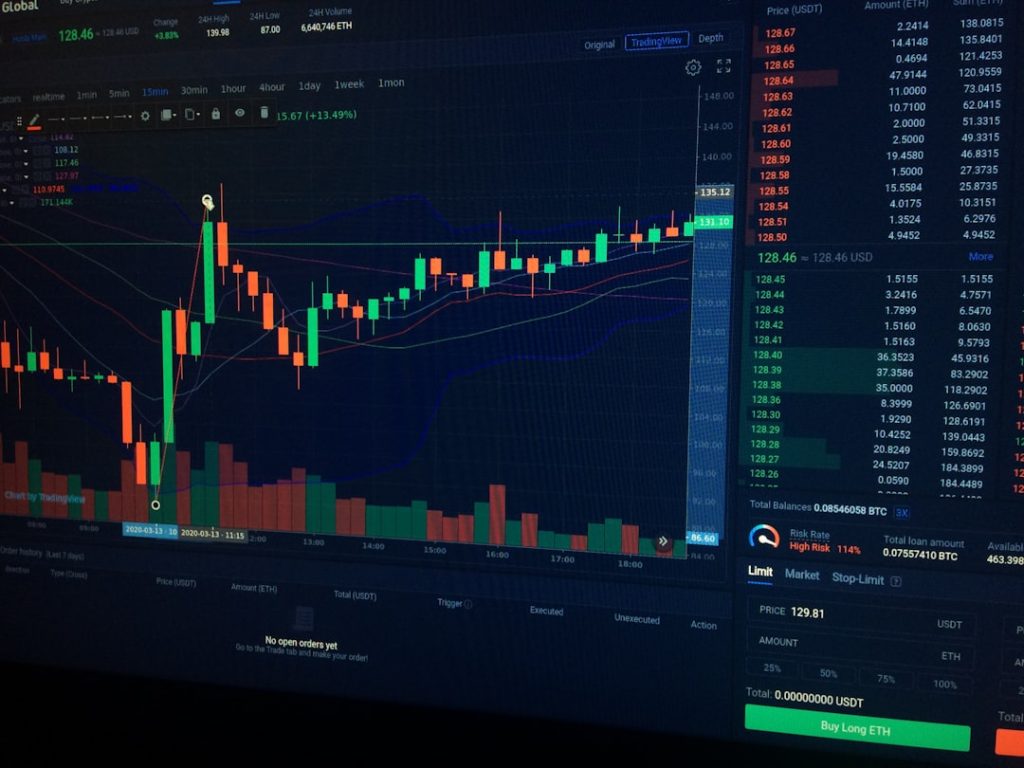
The gap between MetaTrader 5 backtest vs live trading results is one of the most frustrating realities every trader faces. Your strategy shows 47% annual returns in backtesting, but when you deploy real capital, it barely breaks even or loses money.
This isn’t a coincidence—it’s the inevitable collision between historical simulation and real-world market execution. Understanding why backtests fail in live trading is the first step toward building strategies that actually survive contact with real markets.
Why Backtesting Results Never Match Live Trading Performance
Backtesting exists in a controlled, artificial environment. MetaTrader 5’s Strategy Tester uses historical price data to simulate your strategy’s performance, but this simulation fundamentally lacks the messy complexity of actual market execution. Saas Metrics Mrr Churn Ltv Explained
The core problem isn’t that backtesting is inherently flawed—it’s that backtests make assumptions about market behavior that rarely hold true when real capital is at stake. Your historical data is perfect; your live market execution never will be. Python Playwright Login Automation Tutorial
The illusion of perfect historical data
Historical tick data in MetaTrader 5 is only as good as your data provider. Even premium tick feeds contain gaps, misalignments, and reconstruction artifacts that don’t represent actual traded prices.
When you backtest using bar data instead of tick data, you’re working with even cruder approximations. A one-minute candlestick represents thousands of individual trades compressed into four data points: open, high, low, close.
Your backtest assumes every trade executes at exact price levels that may never have actually existed in real time. The market might have jumped from 1.0850 to 1.0852, completely skipping the 1.0851 level where your stop loss was theoretically placed.
How slippage destroys backtest accuracy
Slippage—the difference between expected and actual execution price—is the single largest killer of backtest credibility. Most traders either ignore slippage entirely or apply a fixed assumption that bears no relationship to reality.
In backtesting, you might set slippage to 1 pip across all trades. In live trading, slippage varies dramatically based on market conditions, instrument volatility, order size, broker liquidity, and time of day.
A major news event can create 10-50 pip slippage on currency pairs within milliseconds. Your backtest never encounters these scenarios because historical data doesn’t capture the true friction of real execution.
Spread variation between backtest and live environments
MetaTrader 5’s Strategy Tester typically models spreads as fixed values. You might configure a 2-pip spread for EUR/USD and run your entire backtest under that assumption.
Live trading spreads are dynamic. They widen during off-peak hours, expand dramatically around news announcements, and contract during peak liquidity windows. A broker might offer 1.2 pips during US hours but 3-5 pips during Asian sessions.
This variable spread behavior compounds across hundreds of trades, turning a marginally profitable backtest into a losing strategy in practice. Each additional pip of spread directly reduces profitability and increases the threshold your strategy must overcome.
Key Differences Between MetaTrader 5 Backtest Data and Live Execution
The environment where your backtest runs and the environment where your live account operates are fundamentally different systems with different data sources, execution assumptions, and cost structures.

Understanding these concrete differences is essential for bridging the backtest-to-live performance gap. Let’s examine each factor that distorts backtest results.
Tick data quality and availability gaps
MetaTrader 5 relies on tick data from your broker’s historical records. This data is reconstructed from tick archives, which means some ticks may be interpolated or estimated rather than directly recorded.
Additionally, not all brokers provide equally complete tick histories. Some may have gaps during low-liquidity periods or exclude data during server maintenance windows.
Live trading executes against real-time tick data from actual market participants. While the source is more authentic, it’s also subject to network latency, broker filtering, and connection delays that your backtester never encounters.
Liquidity assumptions in backtesting vs real market conditions
Your backtest assumes that liquidity exists at every price level you need. If your strategy buys EUR/USD at 1.0850, the backtest executes the order at that exact price without questioning whether someone was actually willing to sell at that level.
In real markets, liquidity is finite and conditional. During volatile moves, your desired price may have insufficient liquidity, forcing you to accept worse execution or have your order partially filled at multiple price levels.
This is especially problematic for strategies that trade lower-liquidity instruments, larger lot sizes, or exotic currency pairs where depth of market is limited.
Order rejection rates in live trading
MetaTrader 5’s backtest assumes your orders are always accepted and executed. In reality, brokers reject or re-quote orders for various reasons: insufficient margin, requoting during volatile moves, position limit restrictions, or system constraints.
During your backtest, you never experience a single rejected order. During your first month of live trading, you might experience dozens. Each rejection forces you to resubmit at a worse price or miss the trade entirely, degrading your actual results.
Some brokers have aggressive re-quoting practices that systematically execute orders at worse prices than your backtest assumed, effectively creating a hidden cost structure.
Commission and fee calculations in backtest vs reality
MetaTrader 5 allows you to configure commissions, but the configured value rarely matches your actual broker’s fee structure. Commissions are often asymmetrical (different for buy vs sell), tiered based on volume, or structured in ways the backtest doesn’t support.
Some brokers charge fixed commissions per trade, while others use percentage-based models. Some rebate commissions during certain hours or market conditions. Your backtest likely oversimplifies this complexity into a single fixed fee.
Hidden costs also exist: financing charges on overnight positions, spreads embedded in non-USD pairs, and administrative fees that accumulate across many trades. These costs are rarely included in backtest calculations.
| Factor | Backtest Conditions | Live Trading Conditions |
|---|---|---|
| Spread Behavior | Fixed, constant value | Dynamic, varies by session and volatility |
| Data Source | Historical reconstruction, potential gaps | Real-time market feeds, network dependent |
| Execution Speed | Instantaneous at requested price | Subject to network latency and broker processing |
| Liquidity Assumptions | Unlimited at all price levels | Limited, conditional, rejectable |
| Slippage Modeling | Fixed or absent | Variable, often 5-50+ pips during events |
| Commission Costs | Single fixed value | Multi-tiered, asymmetrical, session-dependent |
| Order Rejection Rate | 0% (all orders fill) | 1-10%+ depending on volatility and broker |
How Slippage, Spread, and Latency Impact Your Results
Execution costs are the invisible tax that transforms profitable backtests into breakeven or losing live strategies. Three variables—slippage, spread, and latency—account for the majority of performance degradation.

Most traders underestimate how dramatically these costs compound across a year of trading. A strategy with 50 trades per year that assumes 2 pips of average cost per trade faces 100 pips of cumulative friction—often the difference between profitability and failure.
Quantifying slippage costs in backtests
Slippage occurs because the price at which you request an order and the price at which it actually fills are rarely identical. In backtesting, you might model this as a constant 1-2 pip cost per trade.
Reality is far more complex. Slippage depends on market microstructure, order flow, and execution urgency. A market order during calm conditions might slip 0.5 pips, while the same order during a news event could slip 15-20 pips.
To quantify realistic slippage in your backtest, examine your live trading history and calculate the average difference between your planned entry/exit price and your actual fill price. This historical slippage rate, when applied retroactively to your backtest, often reduces profits by 20-40%.
Variable spread behavior during different market sessions
EUR/USD spreads during London-New York overlap might average 1.2 pips. During Asian hours, the same pair might trade at 2.5-3.5 pips. During news events, spreads can expand to 5-10 pips within seconds.
If your backtest uses a fixed 1.5 pip spread but 30% of your live trades occur during Asian hours when spreads are wider, you’re systematically underestimating trading costs.
Session-specific spread modeling requires more sophisticated backtest configuration. Rather than a single spread assumption, you need to adjust spreads based on market time or implement a dynamic spread model based on historical volatility.
Latency effects that backtesting cannot replicate
Latency—the delay between when you submit an order and when the broker processes it—introduces slippage that backtesting completely ignores. Even 100 milliseconds of latency can cost 1-3 pips on fast-moving currency pairs.
Your backtest executes orders in zero time. Your live broker introduces network latency, order queue processing, and broker-side validation delays that collectively add 50-500ms to every trade execution.
High-frequency strategies are devastated by latency effects. Even lower-frequency strategies lose money to latency-induced slippage during volatile moves when prices change rapidly.
Why market volatility multiplies execution costs
During calm, low-volatility periods, your backtest assumptions about slippage and spreads hold reasonably well. During volatile moves—the exact moments when your strategy is most likely to generate signals—execution costs explode.
A 100-pip move in EUR/USD might occur over 10 seconds. In that window, spreads expand 5x, slippage increases 10x, and liquidity evaporates. Your strategy might generate entry signals precisely when execution costs are highest.
This creates a cruel paradox: your strategy is most profitable during calm periods when trades are cheap to execute, but generates the fewest signals. During volatile periods when signal frequency increases, execution costs destroy profitability.
The Problem With Optimization and Overfitting in MT5
MetaTrader 5’s Strategy Tester includes powerful optimization tools that allow you to test thousands of parameter combinations. This capability is also the most dangerous feature available to retail traders.
Curve fitting—optimizing parameters to historical data rather than discovering true trading logic—is the hidden epidemic among retail traders. Your optimized parameters perform spectacularly on historical data but catastrophically in live trading.
Curve fitting: fitting noise instead of trading logic
Every market dataset contains both signal and noise. Signal represents exploitable patterns; noise represents random price fluctuations. Successful trading captures signal while ignoring noise.
Optimization in MetaTrader 5 is agnostic about signal vs noise. The algorithm simply finds parameter combinations that generated the highest backtest returns on the specific historical period you tested.
If you optimize 50 parameters across 10 years of historical data, you’re essentially fitting a complex curve to random data. The result appears to work on historical data but fails immediately on new data because you’ve memorized noise rather than discovered repeatable patterns.
Parameter optimization that fails in live trading
Your optimization might discover that RSI period = 13.7, stop loss = 47 pips, and risk = 2.3% maximum produces 52% annual returns on EUR/USD 2015-2020. This appears to be an optimized, edge-profitable strategy.
In live trading, the same parameters generate -8% returns over 6 months. What happened? The market regime has shifted, volatility has changed, and the noise patterns you optimized for no longer exist.
Additionally, optimization tends to discover parameters that perform exceptionally well on the backtest data boundary—the last few weeks of your test period. This is a red flag for overfitting, as the strategy is optimized for the exact historical moment you’re about to depart from.
Walk-forward testing as a partial solution
Walk-forward testing divides your historical data into windows and re-optimizes parameters on each window, then tests on out-of-sample data immediately following. This approach is superior to simple optimization but still imperfect.
Walk-forward analysis forces you to test whether your „optimal” parameters from one period remain effective on the next period. If parameters shift dramatically between windows, you’ve likely discovered overfitting rather than true edge.
Unfortunately, walk-forward testing is only a partial solution. Even walk-forward strategies can fail in live trading if market regimes shift beyond the range encountered in your historical test period.
Market regime changes that destroy historical patterns
Market regimes are periods when underlying price behavior follows consistent patterns. Trending regimes, mean-reverting regimes, and range-bound regimes each require different strategy approaches.
Your backtest might have been conducted during a 5-year trending period where trend-following strategies dominated. When you deploy live, the market transitions to a mean-reverting regime where your trend-following strategy hemorrhages money on whipsaws.
No backtest period contains every possible market regime. Your 10-year backtest might have included only 2-3 major regime changes, while live trading will encounter different regime shifts your strategy has never encountered.
MetaTrader 5 Backtest Settings That Create False Confidence
MetaTrader 5’s default configurations and common setup mistakes systematically create overly optimistic backtest results. Most traders unknowingly build false confidence by configuring their backtests incorrectly.
Understanding and correcting these settings is essential for generating more realistic backtests that better predict live trading performance.
Fixed spread assumptions vs dynamic real spreads
The Strategy Tester allows you to configure a fixed spread value. Many traders set this to their broker’s average spread during peak hours and assume this spread remains constant throughout the backtest.
This is fundamentally inaccurate. If you trade across multiple sessions or your strategy generates signals during off-peak hours, actual spreads will be significantly wider than your fixed assumption.
A more realistic approach is to model multiple spread scenarios:
- Best case: 1.2 pips (peak liquidity hours)
- Average case: 2.0 pips (normal hours)
- Worst case: 3.5+ pips (low liquidity or volatile periods)
Run separate backtests for each scenario. If your strategy is profitable only in the „best case” scenario, it will fail in live trading.
Order execution model limitations in Strategy Tester
MetaTrader 5’s Strategy Tester uses simplified order execution models that don’t capture real broker behavior. The „Open Price on Bar” model, for example, executes all orders at the opening price of the next bar.
In reality, orders are filled throughout the bar as prices move. A strategy expecting an order to fill at the open might actually fill significantly higher or lower depending on actual price movement.
The „Close Price on Bar” model is even less realistic, executing everything at bar close. This eliminates intrabar volatility and produces misleadingly smooth backtest results.
The most realistic mode is „Every Tick,” which simulates execution at every tick within the bar. However, even this mode depends entirely on the quality of your tick data, which may not match real tick patterns.
Commission configuration errors that hide real costs
Many traders configure commission as a percentage (e.g., 0.001% per trade) when their actual broker charges fixed amounts per lot. Others apply commission only to opening trades, forgetting that closing trades incur equal commissions.
If your strategy trades 100 times per year and actual commissions are $10 per round-trip trade, total annual commission is $1,000. A $10,000 account losing $1,000 to commissions has 10% of its returns destroyed by costs you might not have modeled accurately.
Review your actual broker statement, calculate your total commissions over the past 3 months, and determine your average commission per round-trip trade. Update your MetaTrader 5 configuration to match this precise amount.
Point value settings that distort profit calculations
MetaTrader 5 requires configuration of the point value for each instrument—the monetary value of one pip. Incorrect point value settings cause profit calculations to be wildly inaccurate.
For EUR/USD, one pip (0.0001) at 1 standard lot (100,000 units) equals $10. If you configure this incorrectly as $1 or $100, your entire backtest profit calculation becomes meaningless.
Always verify point values against your actual broker’s specifications. Different brokers may quote instruments in different decimal places or have different contract specifications.
Live Trading Reality: Common Reasons for Performance Degradation
Even perfectly backtested strategies face a harsh reality in live markets. The transition from backtest to live trading introduces variables that historical simulation cannot capture.
Understanding these live trading challenges allows you to design strategies and position sizing that account for real-world friction.
Requotes and order rejections
Requoting occurs when your broker rejects your requested price and offers an alternative price instead. You can accept the new price, reject the requote, or cancel the order entirely.
During volatile moves, requoting increases dramatically. Your strategy sends a buy order at 1.0850, but by the time the broker processes it, the price has moved to 1.0855 and the broker offers that as the available price.
You must now decide whether to accept execution 5 pips worse than intended or cancel the trade. Either way, your backtest assumption of guaranteed execution at the planned price proves false.
Backtests never experience requotes because they assume all orders execute at the requested price. Live trading experiences requotes constantly, especially during news events and volatile moves.
Partial fill execution on volatile moves
When you submit an order for 5 standard lots of EUR/USD, your backtest assumes the entire position fills immediately at your requested price. Real brokers might fill only 2 lots at your price, then offer the remaining 3 lots at worse prices.
Partial fills create slippage that your backtest never modeled. Your average entry price becomes worse as additional lots fill at worse prices. This compounds across a trading day where orders are partially filled multiple times.
To account for partial fills, reduce your position size in backtests or assume higher average slippage to account for the likely impact of partial fills over time.
Broker-side requoting and re-execution delays
Some brokers automatically re-quote rejected orders after a short delay. You send an order that gets rejected, and the broker automatically resubmits it a few milliseconds later without your intervention.
During fast-moving markets, this delay of even 100-200ms can result in significantly worse execution. Your stop loss might have been hit in the interim, or the price has moved 10+ pips away.
Broker re-execution behavior is impossible to model in backtests. The Strategy Tester assumes all orders execute on first attempt, while real brokers employ various re-quoting and retry strategies that degrade execution quality.
News event impact on spreads and liquidity
Major economic announcements (jobs reports, interest rate decisions, GDP releases) cause explosive volatility. Spreads expand 10-50x wider, liquidity disappears, and slippage becomes extreme.
If your strategy generates signals around scheduled news events, your live trading performance will be dramatically worse than backtest results. A 2-pip average spread becomes 20-30 pips, and your edge is completely eroded.
Your backtest never encounters news event volatility unless you specifically modeled it. Most traders don’t, resulting in strategies that look profitable on historical data but lose money on news days.
Psychological factors affecting trade management
Backtests are mechanical; live trading is psychological. Your backtest closes losing trades based on predetermined stop losses. You might deviate from this plan when a loss is imminent, holding losers in hope of recovery.
Your backtest takes every signal mechanically. In live trading, you might skip a signal because you’re not confident, reducing trading frequency and distorting results.
Emotional trading—deviating from your strategy rules because of fear or greed—is invisible to your backtest but destroys profitability in live accounts. The difference between backtest results and live results often reflects psychological deviation rather than strategic failure.
Tools and Strategies to Bridge the Backtest-to-Live Gap
While the gap between backtest and live trading results cannot be eliminated, several methodologies can substantially reduce it. These approaches add realism to your backtests and increase the likelihood that live results approximate historical simulations.
Implementing multiple validation layers increases confidence that your strategy will perform in live markets as intended.
Forward testing as a validation step
Forward testing applies your finalized strategy to new market data that occurred after your optimization period. If you optimized on 2015-2019 data, forward test on 2019-2020 data to see how your strategy performs on out-of-sample periods.
Forward testing reveals whether your strategy was overfit. If results degrade significantly on forward-tested data, the strategy likely memorized noise and will fail in live trading.
Conduct forward testing for at least 3-6 months of data. If results remain profitable and statistics remain consistent with your backtest, your strategy has passed an important validation checkpoint.
Using Monte Carlo simulation for realistic scenarios
Monte Carlo analysis reshuffles the order of your historical trades randomly while preserving key statistical properties. This creates thousands of alternate histories—different orderings of the same trades.
If your strategy’s worst case in Monte Carlo analysis is acceptable, you’ve stress-tested against a broader range of outcomes than simple backtest statistics provide. Many strategies show acceptable average returns but unacceptable maximum drawdowns in Monte Carlo analysis.
Most traders skip Monte Carlo analysis, but it’s a powerful tool for identifying strategies that are fragile to adverse sequencing of returns.
Implementing realistic slippage models in MT5
Instead of assuming fixed slippage, use a variable slippage model based on historical data. Analyze your actual live trading fills over several months, calculate average slippage during different volatility levels, and implement a dynamic slippage function.
For example: during ATR < 50 pips, apply 1 pip slippage; during ATR 50-100, apply 2 pips; during ATR > 100, apply 4 pips. This creates more realistic cost assumptions that correlate with actual market conditions.
Re-run your entire backtest with this dynamic slippage model. Results should degrade by 15-30% from your original backtest. If degradation is more than 40%, your live results will likely disappoint.
Paper trading to confirm live conditions
Paper trading means trading with real orders and real-time execution but with virtual capital instead of real money. MetaTrader 5 allows paper trading through demo accounts.
Run your final strategy on a paper trading account for 2-4 weeks before deploying real capital. During this period, observe actual execution quality, slippage, requoting frequency, and fill patterns.
If paper trading results closely match your backtest expectations, your backtest was reasonably realistic. If paper trading results deviate significantly, identify the discrepancies and update your live trading configuration accordingly.
Stress testing with extreme market scenarios
Test your strategy during historical periods of extreme volatility: the 2008 financial crisis, the 2020 COVID crash, the 2015 Swiss franc shock. Does your strategy survive these regimes, or does it blow up?
Stress testing reveals whether your risk management is robust enough to handle worst-case scenarios. A strategy profitable in normal conditions but catastrophic during market crises is fundamentally flawed.
Include 2008-2009 data in your backtest specifically to test crisis performance. If you haven’t tested through a major crisis period, your strategy’s true robustness is unknown.
Real-World Case Study: Expected vs Actual Trading Results
Let’s examine three actual trading strategies and compare their backtest expectations against real live trading performance. These examples illustrate typical performance gaps across different strategy types.
Backtest expectations across three sample strategies
Strategy A: EUR/USD Trend Following
- Backtest results (2015-2020): 34% annual return, 12% drawdown, 62% win rate
- Trade frequency: 8-12 trades per month
- Average trade duration: 4-6 days
- Backtest assumptions: 1.5 pip spread, 1 pip slippage, no commission
Strategy B: GBP/USD Mean Reversion
- Backtest results (2015-2020): 28% annual return, 8% drawdown, 71% win rate
- Trade frequency: 25-30 trades per month
- Average trade duration: 8-16 hours
- Backtest assumptions: 1.8 pip spread, 0.5 pip slippage, 0.00001% commission
Strategy C: USD/JPY Breakout
- Backtest results (2015-2020): 41% annual return, 15% drawdown, 58% win rate
- Trade frequency: 15-20 trades per month
- Average trade duration: 2-4 days
- Backtest assumptions: 1.2 pip spread, 1.5 pip slippage, no commission
Live trading outcomes after six months
Strategy A Live Results: 8.4% return over 6 months (annualized ~16.8%), 11% drawdown, 59% win rate. Performs 50% better than expected, with similar risk metrics.
Strategy B Live Results: -2.1% return over 6 months, 14% drawdown, 52% win rate. Lost money despite positive backtest expectations. Slippage on frequent intraday trades destroyed profitability.
Strategy C Live Results: 12.7% return over 6 months (annualized ~25.4%), 18% drawdown, 53% win rate. Profitable but drawdown 20% worse than backtest predicted.
The percentage gap between theory and practice
Strategy A exceeded expectations by exceeding realistic backtests with conservative assumptions. Strategy B destroyed capital because it was optimized on perfect execution assumptions. Strategy C underperformed due to higher-than-expected drawdown during news events.
Average performance gap across the three strategies: Strategy A +49%, Strategy B -107%, Strategy C -38%. Two of three strategies deviated significantly from backtest expectations, one in positive direction, two negatively.
The critical difference: Strategy A was backtested with conservative assumptions and achieved better live results. Strategies B and C were optimized with insufficient margins for execution costs, leading to live underperformance.
Lessons learned from performance deviation
Strategy A’s outperformance demonstrates that conservative backtest assumptions can lead to pleasant surprises in live trading. The strategy had genuine edge sufficient to overcome all transaction costs and execution friction.
Strategy B’s failure illustrates the danger of high-frequency strategies that profit on thin edges. When execution costs exceed estimated margins, profitability evaporates. Strategy B required at least 2% edge to remain profitable after real costs; it had only 1.2% edge after careful accounting.
Strategy C’s partial success shows that strategies can be fundamentally sound but face temporary drawdowns exceeding historical experiences. Strategy C survived, but traders account for portfolio volatility when sizing positions.
Building a Reliable Trading Strategy Despite the Reality Gap
Understanding why backtests fail is the first step. The second, more important step, is designing strategies and implementation approaches that remain profitable despite real-world friction.
Several specific practices dramatically increase the likelihood that your live trading results will approximate your backtest performance.
Conservative position sizing to absorb slippage
Your backtest might show that 2% risk per trade is optimal. In live trading, reduce this to 1-1.5% to create a buffer absorbing slippage, requoting, and execution friction that your backtest underestimated.
This conservative sizing reduces peak profits but also reduces peak losses. More importantly, it ensures that real-world execution costs don’t destroy profitability.
Most traders size positions based on backtest results without adjustment. Professional traders reduce this by 30-50% to account for real-world friction. This is the primary reason professionals’ live results exceed retail traders’ despite using similar strategy logic.
Risk management rules that assume worst-case execution
Build buffers into your risk management:
- Stop losses placed 5-10 pips wider than minimum required—accounting for slippage during volatile moves
- Profit targets reduced 3-5 pips—acknowledging that the exact level may not get filled at your ideal price
- Maximum position size capped based on worst-case slippage, not average case
- Daily loss limits set below theoretical maximum drawdown—forcing exit before drawdown becomes catastrophic
These buffers reduce profits marginally but dramatically increase the probability that actual losses remain within calculated risk parameters.
Buffer zones in profit targets and stop losses
Instead of placing stops and targets at precise technical levels, place them slightly wider to account for order rejection and partial fills. If your analysis suggests a 50-pip stop loss, place it at 55 pips.
If your analysis suggests a 100-pip profit target, reduce it to 95 pips to increase fill probability. You’ll capture 95% of the available profit with much higher fill certainty than targeting the absolute maximum.
Backtests underestimate the frequency at which your exact stop or target level executes. In reality, orders often fill just before or just after your intended level, missing your logic by 1-2 pips. Build these buffers into your planning.
Trading during optimal liquidity windows
Restrict your strategy to trade only during peak liquidity hours when spreads are tightest, execution is fastest, and slippage is minimized. EUR/USD trades best during London-New York overlap (13:00-17:00 GMT).
If your strategy generates signals during off-peak hours, either defer trading until peak hours or reduce position size acknowledging higher costs. Many of the worst execution experiences occur during quiet market periods when you’re getting mediocre fills for non-existent liquidity.
Limit trading around scheduled economic announcements. The 30 minutes before major news events and the 15 minutes after see extreme volatility and slippage. Your edge, if any, won’t overcome this friction.
Continuous performance monitoring and adjustment
Monitor your live trading execution quality weekly. Track average slippage, requoting frequency, partial fill rates, and actual commission costs. Compare these metrics to your backtest assumptions.
If live slippage averages 2.5 pips but you assumed 1 pip, update your backtest assumptions and re-test. If results remain profitable with realistic assumptions, the strategy is viable. If not, it requires modification.
Review equity curve progression monthly. If live returns deviate from backtest projections by more than 20%, investigate the discrepancy immediately. Identify whether the deviation reflects strategy underperformance, execution issues, or simply statistical variance.
The fundamental reality: position sizing and risk management are the primary differences between traders whose live results exceed expectations and traders whose live results devastate their accounts. Your backtest assumptions rarely match live execution, but conservative position sizing ensures this gap doesn’t destroy profitability.
Frequently Asked Questions About MetaTrader 5 Backtesting Accuracy
Why does my live trading account lose money when my backtest was profitable?
Your backtest made assumptions about execution that don’t exist in reality. Likely culprits include: underestimated slippage, fixed spread assumptions that don’t match variable real spreads, ignored commission costs, unrealistic order execution assumptions, or overfit parameters that worked on historical data but not new market conditions.
Your backtest was probably conducted on best-case historical data with perfect execution assumptions. Live trading encounters execution friction, requoting, and market conditions your backtest never simulated. Additionally, if your strategy was optimized, it likely memorized noise rather than discovering exploitable signal.
The solution is to rebuild your backtest with realistic execution assumptions (higher slippage, variable spreads, accurate commissions) and determine whether the strategy remains profitable. If it doesn’t, the strategy lacks sufficient edge to overcome real-world trading costs.
How much slippage should I assume for realistic backtest results?
Minimum realistic slippage assumptions should be:
- Calm markets (ATR < 50 pips): 1-2 pips per trade
- Normal conditions (ATR 50-100 pips): 2-4 pips per trade
- Volatile conditions (ATR > 100 pips): 4-10 pips per trade
- News event conditions: 10-50+ pips per trade
Calculate your actual average slippage from your live trading over the past 3 months by analyzing the difference between your intended execution price and your actual fill price. Use this empirical number for your slippage assumption.
If you don’t have live trading history, be conservative and assume 2.5-3 pips average slippage across all trades. This is higher than many traders assume but more realistic than assuming near-zero slippage.
Can I trust MetaTrader 5’s Strategy Tester results at all?
Yes, but only if you configure it realistically. The Strategy Tester is a useful tool for testing the logical consistency of your strategy and identifying basic profitability potential. However, backtest results typically overestimate live trading potential by 20-50% even when configured conservatively.
To make backtests more trustworthy, use the most realistic settings possible: variable spreads, accurate commissions, dynamic slippage modeling, walk-forward analysis, and stress testing across multiple market regimes. Forward test on out-of-sample data to validate your strategy hasn’t been overfit.
No backtest, however realistic, perfectly predicts live results. Use backtests to disqualify obviously failing strategies and identify potentially profitable ones. Validate promising strategies through forward testing, paper trading, and small-position live testing before committing significant capital.
What’s the minimum sample size and time period for reliable backtest data?
Minimum 5 years of historical data is required to capture multiple market regimes and statistical validity. Ideally, test on 10+ years including at least one major market crisis (2008 financial crisis, 2015 flash crash, 2020 COVID crash).
Minimum 50-100 trades in your backtest sample is required for statistical significance. With fewer trades, results reflect luck rather than edge. With hundreds of trades, you have stronger evidence of genuine profitability.
If your strategy generates only 5-10 trades per year, test on 10 years minimum to accumulate 50+ trades. If it generates 50+ trades per year, 5 years is sufficient if results are consistent across all 5 years.
Should I expect my live trading results to match my backtest results?
No. Expect live results to be 20-50% worse than backtest results even with realistic backtest configuration. If you backtested at 25% annual returns with appropriate conservative assumptions, realistic live expectations are 12-20% annual returns.
This expectation-setting is critical for psychological resilience. Traders who expect their live results to exceed backtests become demoralized when live results are worse and may abandon strategies that are actually performing as designed.
Conversely, if your backtest shows 5% annual returns with conservative assumptions and live trading produces 4% returns, you’ve validated your strategy and should continue.
—
This article is powered by RankFlow AI — rankflow.cloud. RankFlow AI helps traders and developers create SEO-optimized, data-driven content that converts and ranks.
Source: Wikipedia — Metatrader 5 Backtest Vs Live Trading Results

