Building a SaaS product from scratch can feel overwhelming, but with the right SaaS MVP development guide, you can launch a functional product in weeks rather than months. This comprehensive guide walks you through every critical step—from defining your core problem to scaling after launch—so you can validate your idea quickly and start acquiring customers before your competition does.
The SaaS landscape rewards speed and validation over perfection. By focusing on an MVP (Minimum Viable Product) approach, you’ll reduce development costs, gather real customer feedback faster, and iterate toward product-market fit without burning through your entire budget on features nobody asked for.
Why SaaS MVP Development Matters: Speed to Market Beats Perfection
In the SaaS space, speed to market is a competitive advantage. Every month you delay launching your product is a month your potential customers are using inferior solutions—or worse, a competitor’s solution that’s already solving their problem. Multi Timeframe Analysis Mql5 Expert Advisor
The traditional approach to software development—building every planned feature before launch—consistently fails in SaaS. Most startups that follow this path run out of money before seeing a single paying customer, or discover their assumptions about customer needs were completely wrong. Metatrader 5 Backtest Vs Live Trading Results
The Cost of Delay in SaaS Product Launches
Delays in SaaS product development don’t just cost time; they cost capital. Each additional month of development typically requires another $15,000-$50,000 in team salaries, infrastructure, and operational expenses, depending on team size and location.
Beyond financial costs, delays also mean opportunity costs. Your target market is actively looking for solutions right now. By waiting to perfect every feature, you’re allowing competitors to capture market share, establish brand presence, and build customer loyalty that becomes harder to overcome.
According to research on lean startup methodology, companies that validate their core assumptions quickly and iterate based on real user feedback grow 30% faster than those following traditional waterfall development approaches.
MVP vs. Full-Featured Product: Where to Draw the Line
The critical distinction between MVP and a full-featured product comes down to scope. An MVP includes only features necessary to solve your customer’s core problem and validate that customers will pay for your solution.
A full-featured product includes everything on your product roadmap—integrations, advanced analytics, white-label capabilities, mobile apps, and all the nice-to-have features that add complexity without adding core value.
- MVP scope: One core problem solved brilliantly with 3-5 essential features
- Version 2 scope: Expanded workflows, additional use cases, and integrations
- Full-featured scope: Comprehensive suite addressing all customer needs across multiple roles
How Lean Development Accelerates Market Validation
The MVP approach eliminates guesswork. Instead of assuming what customers want, you release a working product and let real behavior guide your development priorities.
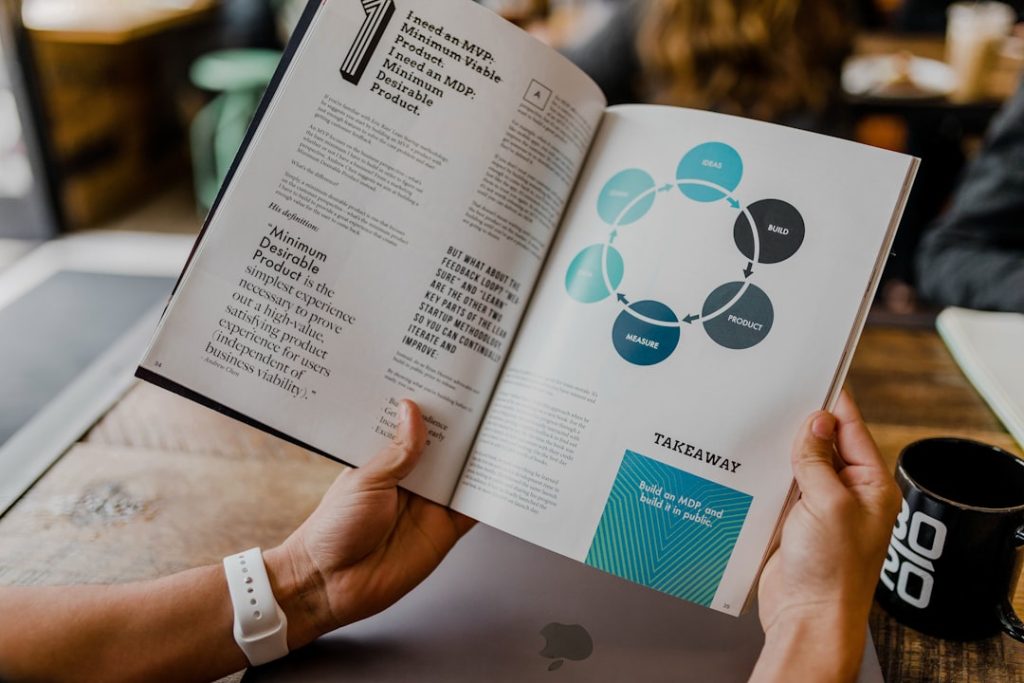
This lean approach to SaaS MVP development creates a feedback loop: build → launch → measure → learn → improve. Companies using this cycle typically identify their winning feature set 60% faster than companies guessing about customer needs.
Early customer conversations shift from theoretical (“Would you pay for X?”) to practical (“I’m using your product and here’s what’s broken”). This real usage data is invaluable for prioritizing your roadmap after launch.
Define Your Core Problem: The Foundation of Every Successful SaaS MVP
Every successful SaaS product solves a specific problem for a specific audience. The more precisely you define that problem, the clearer your development roadmap becomes.

Problem clarity eliminates feature ambiguity. When your entire team understands the single problem you’re solving, saying “no” to feature requests becomes easier, and scope creep becomes visible and avoidable.
Identify Your Single Most Critical User Problem
Interview at least 10-15 potential customers before writing a single line of code. Ask open-ended questions about their current workflow, frustrations, and workarounds they’ve built.
Listen for recurring pain points. The problems mentioned by 8 out of 10 customers are your MVP targets; problems mentioned by 2 out of 10 are Version 2 opportunities.
- Document the exact problem statement in one sentence
- List the current solutions your target customers use (competitors, spreadsheets, manual processes)
- Identify why those solutions are inadequate or expensive
- Define your ideal customer profile—who suffers from this problem most intensely?
Map Customer Pain Points to Feature Scope
Create a simple matrix: list customer pain points on one axis and potential features on the other. Which features address which pain points? Which pain points could be solved with a single feature?
This exercise reveals whether you’re solving one focused problem or trying to solve five different problems. SaaS MVP development succeeds with the former, not the latter.
Create a Problem Statement That Guides Development Decisions
Write a clear problem statement: “For [target customer], who [context], our product addresses [problem] by [solution approach], unlike [existing alternatives] which [why they’re inadequate].”
Post this statement in your development space. When a feature request comes up, check it against this statement. If the feature doesn’t directly address your core problem for your core customer, defer it to a later version.
“Your MVP succeeds not by doing everything, but by solving one problem brilliantly. Everything else is distraction.”
SaaS MVP Technology Stack: Tools That Just Work
Choosing the right technology stack for your SaaS MVP development is about balancing speed, scalability, and team expertise. You don’t need to choose the most powerful framework; you need to choose the framework your team can build with most effectively.

Backend Frameworks: Node.js, Python Django, and When to Choose Each
Node.js excels when your team knows JavaScript deeply or when you need to build rapidly with minimal context switching between frontend and backend. JavaScript across the full stack reduces cognitive overhead.
Python Django is ideal for backend-heavy applications where your team has Python experience. Django’s batteries-included approach means authentication, ORM, and admin panels come built-in, reducing development time.
Go suits performance-critical applications with concurrent user requirements. If your MVP handles real-time data or high concurrency, Go’s efficient runtime offers advantages.
- Choose based on team expertise first, performance second
- Avoid introducing new languages or frameworks just for your MVP
- Consider cloud deployment support and available hosting options
Frontend Solutions: React, Vue, or Lightweight Alternatives for MVPs
React dominates the SaaS space. It has massive community support, abundant libraries, and deep expertise in the market. For MVP development, React’s ecosystem means faster problem-solving when issues arise.
Vue.js offers a gentler learning curve and can be adopted incrementally. If your team has limited front-end experience, Vue’s straightforward syntax often means faster development velocity.
Lightweight alternatives like HTML/CSS/vanilla JavaScript or server-rendered approaches can work for MVPs with minimal interactivity. These approaches reduce complexity and potential performance issues.
Database and Infrastructure: PostgreSQL, MongoDB, and Cloud Deployment Options
PostgreSQL should be your default relational database choice. It’s open-source, feature-rich, incredibly reliable, and scales well. Use it unless you have specific reasons not to.
MongoDB works well for document-heavy applications where schema flexibility offers real advantages. For most SaaS applications, PostgreSQL’s relational structure actually simplifies development.
Cloud deployment options like AWS, Heroku, or DigitalOcean abstract away infrastructure complexity. Heroku is specifically excellent for MVP development—it trades some cost efficiency for massive developer experience gains.
Authentication and Security: Essential Tools for Launch-Ready MVPs
Don’t build authentication yourself. Use Auth0, Supabase, or Firebase for user management. These services handle password security, account recovery, and compliance requirements that you shouldn’t implement yourself.
Essential security elements for launch-ready MVPs include HTTPS (automatic with modern hosting), rate limiting on APIs, and basic input validation. Security is non-negotiable but doesn’t require implementing every advanced protection immediately.
| Frontend Framework | Development Speed | Scalability | Learning Curve | Best For |
|---|---|---|---|---|
| React | Medium-Fast | Excellent | Moderate | Complex, interactive UIs |
| Vue.js | Fast | Good | Easy | Teams learning frontend |
| Svelte | Very Fast | Good | Easy | Performance-critical MVPs |
| Vanilla HTML/JS | Very Fast | Adequate | Very Easy | Simple, information-focused apps |
Building vs. Buying: Custom Development or No-Code Platforms for Your SaaS MVP
The build-versus-buy decision shapes your entire MVP timeline and cost structure. Both approaches have legitimate use cases; the right choice depends on your specific product and constraints.
When Custom Development Delivers Competitive Advantage
Custom development makes sense when your core value proposition depends on proprietary technology or unique workflows. If your competitive advantage is algorithmic, you need custom development.
If you’re building a specialized SaaS platform serving a niche market with specific requirements, custom development allows you to optimize every interaction for your exact customer workflows.
Consider custom development when existing platforms would require expensive workarounds or when your MVP roadmap requires rapid iteration on core features based on user feedback.
No-Code and Low-Code Platforms: Speed and Limitations
No-code platforms like Bubble, FlutterFlow, or Webflow can get your SaaS MVP to market in weeks. These platforms excel when your application primarily involves data collection, display, and workflow automation.
The limitation of no-code platforms becomes apparent when you need custom logic, complex integrations, or when your product needs to scale beyond the platform’s intended use case.
- No-code works best for workflows, dashboards, and form-based applications
- No-code struggles with real-time collaboration, complex algorithms, or high-concurrency requirements
- No-code platforms may become expensive as you scale, sometimes costing more than custom infrastructure
Hybrid Approaches: Combining Platforms with Custom Modules
The hybrid approach leverages no-code for rapid MVP development while building critical custom components. For example, you might use Airtable as your database and low-code frontend builder, while building a custom algorithm module in Python.
This approach accelerates your MVP launch while maintaining flexibility for your core competitive advantage. Hybrid development lets you prove concept quickly while building toward a custom solution.
Cost-Benefit Analysis for Each Approach
Custom development typically costs $20,000-$60,000 for a basic MVP with a small team over 8-12 weeks. Infrastructure and ongoing maintenance add $500-$2,000 monthly.
No-code platforms might cost $3,000-$8,000 to build your MVP, with platform fees of $200-$800 monthly. However, customization beyond the platform’s intended scope becomes exponentially expensive.
Hybrid approaches offer middle ground: $10,000-$30,000 initial development, with $300-$1,500 monthly costs, providing flexibility if your MVP insights require custom development later.
MVP Scope Definition: What Features to Build and What to Defer
Scope discipline separates successful SaaS MVP development from failed projects that never launch. The feature prioritization framework gives you a systematic way to make these decisions.
The Feature Prioritization Framework: MoSCoW Method for SaaS
The MoSCoW method categorizes features into four buckets:
- Must Have: Features without which your product doesn’t solve the core problem. Your MVP includes only Must-Have features.
- Should Have: Features that enhance the core solution but aren’t strictly necessary. These become Version 1.1.
- Could Have: Nice-to-have features that delight users but exist in competitor products too. These are Version 2+.
- Won’t Have (Yet): Features you’ll explicitly defer. Knowing what you’re not building is as important as knowing what you are.
Apply MoSCoW ruthlessly. If you can’t decide whether something is “Must Have” or “Should Have,” it’s probably “Should Have” and belongs in Version 1.1.
Essential Features That Validate Your Core Value Proposition
Your MVP’s essential features should be the minimum set that proves customers have the problem you’re solving and that your solution actually works.
For a project management SaaS, for example: task creation, task assignment, task completion, and notification would be essential. Timeline views, Gantt charts, and resource allocation would be Should-Have for later versions.
- Validate that the problem actually exists and customers will pay
- Demonstrate that your proposed solution addresses the problem
- Prove that customers can use your product independently, without heavy onboarding
Common Scope Creep Pitfalls and How to Avoid Them
Scope creep kills MVP projects. Early customer conversations reveal interesting features; “nice to have” requests multiply; your vision expands. Before you realize it, your 8-week MVP becomes a 6-month project.
Combat scope creep by: (1) maintaining a strict feature list for MVP launch, (2) maintaining a separate roadmap for post-launch features, and (3) making go/no-go decisions for any feature outside the original MVP scope.
When someone requests a feature, write it in the roadmap and commit to evaluating it after launch. This approach respects the request while protecting your launch timeline.
Roadmap Planning: What Comes After MVP Launch
Successful SaaS MVP development planning includes a post-launch roadmap. Your MVP launch isn’t the end; it’s the beginning of customer feedback loops that should inform Version 1.1.
Plan to release Version 1.1 improvements within 4-6 weeks of launch, based on real customer usage data and feedback. This rapid iteration cycle builds momentum and shows customers you’re responsive to their needs.
SaaS MVP Development Timeline: Realistic Delivery Expectations
Realistic timelines prevent disappointment and allow proper planning. Most SaaS MVP development projects take 8-16 weeks from discovery to launch, depending on complexity, team experience, and scope.
Typical Development Phases: Discovery, Build, Test, Launch
Discovery (2-3 weeks): Customer research, problem validation, feature specification, technology stack selection, architecture planning. This phase determines project success more than any other.
Build (4-8 weeks): Core feature development, authentication implementation, basic infrastructure setup. This phase duration depends heavily on team size and feature complexity.
Test (1-2 weeks): Quality assurance, security review, performance optimization, beta user feedback. This isn’t just finding bugs; it’s ensuring the product actually solves the intended problem.
Launch (1 week): Final preparations, early access program setup, monitoring and support readiness. Launch itself is less dramatic than the preceding work.
Time Estimates for Different Product Complexities
Simple SaaS (form collection, automation, basic workflow): 6-8 weeks total. Examples include email automation tools, basic CRM platforms, or survey applications.
Moderate complexity (real-time collaboration, custom calculations, integrations): 10-14 weeks total. Examples include project management tools, analytics dashboards, or specialized productivity apps.
Complex SaaS (real-time data processing, machine learning, extensive APIs): 16-24 weeks total. Examples include AI-powered applications, data analytics platforms, or infrastructure management tools.
How Team Size and Expertise Impact Delivery Speed
A focused team of 2-3 experienced developers often ships faster than a team of 5 less experienced developers. Coordination overhead grows with team size, sometimes slowing overall velocity.
Hiring junior developers for your MVP often extends timelines due to onboarding and mentoring requirements. For MVP development, prioritize team experience over team size.
A team with existing infrastructure experience (deployment, databases, security) ships 40% faster than a team implementing infrastructure patterns for the first time.
Parallel Workflows to Compress Timelines Without Sacrificing Quality
While backend development progresses, frontend team members can design and build UI components. Design work happens in parallel with architecture decisions.
Documentation and user guide drafting can begin once core features are locked in, not waiting for final build completion. This parallel approach typically compresses timelines by 2-3 weeks.
- Start design work immediately after feature prioritization
- Begin infrastructure setup while core features are specified but not built
- Begin documentation once core features are locked, not finalized
- Set up monitoring and analytics infrastructure during build phase, not after launch
Budget Planning for SaaS MVP Development: From Concept to Launch
Budget planning for SaaS MVP development prevents financial surprises and helps you understand where capital is best invested. Most MVPs require $25,000-$75,000 initial investment, with significant variation based on approach.
Cost Breakdown: Development, Infrastructure, and Third-Party Services
Development costs constitute 60-70% of most MVP budgets. A team of 2-3 developers working for 12 weeks at average market rates ($50-$80/hour) costs $25,000-$45,000.
Infrastructure and deployment typically run $500-$2,000 monthly. This includes cloud hosting (AWS, Google Cloud, or alternatives), databases, CDNs, and monitoring tools.
Third-party services include payment processing (Stripe: 2.9% + $0.30 per transaction), authentication (Auth0: free-$299/month depending on scale), email delivery (SendGrid: free-$100+/month), and analytics ($0-$500/month).
Outsourcing vs. In-House Development: Financial Implications
In-house development costs more initially (salary, benefits, overhead) but offers long-term cost advantages and team continuity. A hired team member becomes familiar with your product, accelerating post-launch iteration.
Outsourced development costs less initially ($10,000-$30,000 for a quality MVP) but risks delayed communication, quality issues, and handoff complexity. The best outsourcing partners are 30-40% more expensive than the cheapest options, reflecting quality differences.
Hybrid approaches combine internal tech leads with outsourced developers, balancing cost and quality. An internal architect with outsourced builders often delivers faster than either approach alone.
Optimizing Spend: Where Investment Matters Most for MVPs
Invest heavily in problem research and feature prioritization. The cost of wrong prioritization (building features nobody wants) is far higher than the cost of careful planning.
Invest in experienced developers over junior developers. A single experienced developer often delivers faster and better quality than two junior developers, ultimately costing less despite higher hourly rates.
Optimize infrastructure spend by using managed services that scale automatically rather than fixed infrastructure. Heroku costs more at small scale but eliminates deployment complexity.
Hidden Costs That Derail SaaS MVP Budgets
Scope creep is the biggest hidden cost. Each unplanned feature adds weeks to timelines and thousands to budgets. Protect your scope estimates with discipline.
Regulatory compliance and security audits can cost $5,000-$15,000 if your SaaS handles sensitive data (healthcare, financial, personal information). Budget for this early if relevant to your market.
Customer onboarding and support infrastructure costs more than expected. Plan for 40+ hours of onboarding materials, help documentation, and customer support setup during your launch phase.
- Change request management costs: $2,000-$5,000 if not managed disciplined
- Performance optimization: $3,000-$8,000 if needed post-launch
- Integration development: $5,000-$15,000 per integration if needed before launch
- Compliance and legal: $2,000-$10,000+ depending on industry
Launch Strategy and Post-MVP Iteration: Turning Validation Into Growth
Building your MVP is just the first milestone. Launching strategically, gathering feedback, and iterating based on real usage data determines whether your MVP succeeds or fails.
Going to Market: Beta Testing, Early Access, and Soft Launches
Beta testing with 20-50 target customers reveals product issues before public launch. These customers expect an imperfect product and provide invaluable feedback.
Early access programs (closed beta with 100-500 users) validate product-market fit signals before full public launch. Measure signup rate, activation rate, and feature adoption during this phase.
Soft launches to specific customer segments test messaging, pricing, and support infrastructure. A soft launch to 10 customers reveals problems before launching to 1,000.
Collecting Customer Feedback: Structured Approaches That Matter
Don’t rely on general “What do you think?” feedback. Use structured approaches: weekly one-on-one calls with 5-10 active users, in-app surveys targeting specific features, and usage analytics revealing where users get stuck.
Separate feature requests from usage problems. A customer requesting a feature might actually need your existing feature explained better. Usage data reveals what people actually need.
- Hold weekly customer calls with your most active users
- Implement usage analytics to see what features actually get used
- Use heat mapping and session recording to identify friction points
- Deploy in-app surveys asking why customers selected specific workflows
Metrics That Define MVP Success
Acquisition metrics: Signup rate, signup source, and customer acquisition cost. Are customers finding you? Where are they coming from?
Activation metrics: What percentage of signups actually try the core feature? Activation reveals whether users understand your value proposition.
Retention metrics: What percentage of users return after first use? Weekly or monthly active users indicate whether your product solves a real problem.
Revenue metrics: Conversion rate to paying customers and average revenue per user. These metrics prove customers believe the product is worth paying for.
Your MVP succeeds when 10%+ of signups activate (try the core feature), and 3%+ of signups convert to paying customers within 30 days. These aren’t universal thresholds, but reasonable MVP targets.
Scaling Your Product: What Comes After Initial Traction
If your MVP shows traction (growth and retention), your next phase is scaling infrastructure, expanding features based on customer feedback, and increasing marketing spend.
Most successful SaaS companies don’t pivot away from their MVP value proposition; they deepen it. Version 2 builds on the core problem-solving capability, expanding for new customer segments or use cases.
Plan your post-launch roadmap based on customer feedback, not your original product vision. Your customers will teach you what features matter most and where the real opportunities lie.
Frequently Asked Questions
How Long Does It Actually Take to Build a Functional SaaS MVP?
A functional SaaS MVP typically takes 8-16 weeks from project start to public launch. This timeline assumes 2-3 experienced developers, clear scope, and adequate discovery phase time.
Simple MVPs (straightforward workflows, minimal integrations) can launch in 6-8 weeks. Complex MVPs with real-time features, custom algorithms, or extensive integrations often require 16-24 weeks.
The discovery phase (customer research, scope definition, architecture planning) typically takes 2-3 weeks and should never be rushed. Quality discovery reduces build time and rework significantly.
Should I Invest in Mobile Development for My Initial MVP?
Avoid native mobile apps for your MVP launch. Most SaaS products find 80-90% of their initial usage on desktop. Build a responsive web application first.
If mobile usage proves critical post-launch (confirmed through analytics, not assumptions), develop mobile apps for Version 2 or later. This approach lets you validate core problem-solving before investing in mobile complexity.
Progressive Web Apps (PWAs) offer a middle ground—web apps that work offline and can be installed like native apps. PWAs often deliver the mobile experience your users need without native app development costs.
What’s the Minimum Budget Required to Launch a Viable SaaS Product?
The absolute minimum budget for a bootstrapped SaaS MVP is $8,000-$15,000, assuming a single experienced developer working nights and weekends over 4-5 months, plus minimal infrastructure costs.
A realistic budget for a professionally developed SaaS MVP with a dedicated team is $25,000-$60,000. This covers experienced developer time (8-12 weeks), hosting, third-party services, and necessary tools.
If you outsource to quality teams (not budget development shops), expect $30,000-$75,000 for a basic MVP. Budget developers cost less but often deliver slower, with more rework required.
How Do I Know When My MVP is Ready for Public Launch?
Your MVP is ready for public launch when it solves the core problem for your target customer without significant workarounds, and when 5-10 beta customers validate that your solution works.
Don’t wait for perfection. Bugs are acceptable; missing core functionality is not. If your MVP’s essential features work reliably, support customers through the rough edges, and gather feedback to improve, you’re ready to launch.
Public launch happens when you’re confident enough to direct paying customers to your product. This confidence comes from beta customer validation, not from shipping every possible feature.
What’s the Most Common Mistake in SaaS MVP Development?
The most common mistake is building too many features. Founders underestimate scope, overestimate time, and ship late with a product that tries to do everything.
The second most common mistake is insufficient customer research. Building what you think customers need instead of what they actually need leads to MVPs solving non-problems or solving them poorly.
Avoid these by committing to strict scope discipline, investing heavily in discovery, and launching with fewer features than you’re comfortable with. Your MVP should feel incomplete; that’s how you know you’re ready to launch.
—
Ready to build your SaaS MVP? The companies that move fastest win market share. Start with clear problem definition, disciplined scope, and a commitment to launching in weeks, not months. Your customers are waiting for a solution; make it, validate it, and iterate.
Powered by RankFlow AI
Automate the SEO side of your projects
If you ship sites and keep having to write content for them, RankFlow handles the keyword research, drafting and rank tracking through an API — so it fits into your existing pipeline instead of adding another dashboard.